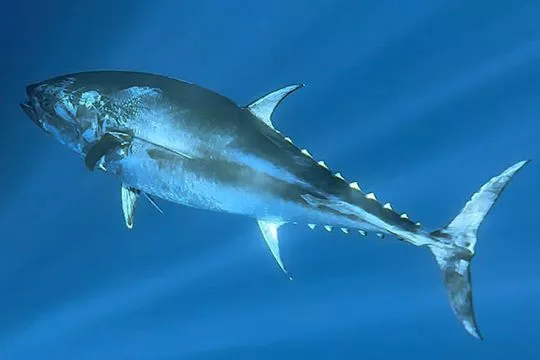
In the pre-dawn darkness of Tokyo's Toyosu fish market, as most of Japan was still sleeping off New Year's celebrations, Kiyoshi Kimura stood among the rows of giant bluefin tuna, eyeing his prey. The man they call the "Tuna King" was about to make history once again — and this time, even he was surprised by how much it would cost him. When the auctioneer's bell finally rang on Monday morning, Kimura had secured a magnificent 243-kilogram bluefin for a staggering 510 million yen — roughly $3.2 million, or about €2.8 million. It's the highest price ever paid for a single fish since records began in 1999, smashing his own previous record of 334 million yen set back in 2019. "I'd thought we would be able to buy a little cheaper," the restaurateur admitted afterward with a wry smile, "but the price shot up before you knew it." The prized specimen was caught off the coast of Oma in northern Japan, a remote fishing town that has built its reputation on producing some of the world's finest bluefin tuna. For connoisseurs, Oma tuna represents the pinnacle of quality — fish with the perfect balance of rich, fatty meat that practically melts on the tongue. Bidders at the auction carefully examined each fish, inspecting the exposed tail meat for color, texture, and that all-important fat content that Japanese diners treasure. For Kimura, 72, who owns the popular Sushi Zanmai restaurant chain, winning the New Year auction has become something of a personal tradition. He's claimed the top fish multiple times over the years, each victory generating headlines and cementing his reputation as Japan's most famous tuna buyer. "When I see a good looking tuna, I cannot resist," he confessed, a sentiment that has apparently cost him millions over the decades. But here's what makes this extravagant purchase remarkable: customers at Sushi Zanmai won't pay anything close to that astronomical price. The massive fish was transported to the chain's headquarters and distributed across its restaurants nationwide, where it will be served at regular menu prices. It's a marketing masterstroke that has worked for years — the record-breaking purchase generates global media coverage worth far more than the price of the fish itself. The timing of this record sale carries deeper significance for the bluefin tuna species. Pacific bluefin stocks were once teetering on the brink of collapse due to overfishing and climate change. Conservation experts say a recovery plan introduced in 2017 is finally showing results, with populations gradually rebuilding. It's a rare piece of good news in a fishing industry often dominated by stories of decline. As the sun rose over Tokyo Bay on that cold January morning, workers began the delicate process of butchering Kimura's prize catch. Within hours, slivers of that record-breaking fish would be placed on beds of seasoned rice in restaurants across Japan. For the diners lucky enough to taste it, each bite represents a piece of culinary history — though they'll never know just how much their breakfast actually cost.
 World
World
Comments